


Climate action and adaptation plan Building energy reach codes
In August 2024, the City adopted its inaugural Climate Action and Adaptation Plan (CAAP), a greenprint to achieve carbon neutrality by the year 2045. A community greenhouse gas inventory shows that natural gas usage in existing buildings comprises 38% of total community greenhouse gas emissions.
-Measure BE-1 of the CAAP directs electrifying 100% of new construction in the City in 2024
-Measure BE-2 directs the electrification of residential buildings to reduce natural gas consumption by 26% by the year 2030.
-Measure BE-3 directs the electrification of existing commercial and mixed-use buildings to reduce natural gas consumption by 18% by 2030.
A key strategy listed in the CAAP to make progress towards this goal is the adoption of reach codes to reduce greenhouse gas emissions from building energy.
A reach code is a local ordinance which adds additional requirements to the state’s building code in order to address issues such as greenhouse gas emissions reduction, energy efficiency, air quality, public health, safety, and more. Reach codes are informed by community input and feedback as they apply to residential and non-residential building owners.
At this time, the City is currently considering adoption of reach codes for existing single-family residential buildings, existing and new multifamily buildings, and existing nonresidential buildings. If adopted, potential requirements may include installing electrification measures such as a heat pump space conditioning system when replacing or adding a central air conditioner, with the option still available to keep a gas furnace provided other efficiency measures are installed. Learn about the full list of policies under consideration below.
The City plans to adopt reach codes for other building types in the near future to further align with CAAP goals.
Please participate in the development of these codes to ensure they are a reflection of our community vision.
This website is constantly growing with new updates and resources. Check back often!
Project Timeline
July
- Project website launch
- Community outreach and engagement
- Community survey release (coming soon)
September-March
- Policy development
- Interested parties outreach
April
- Draft Ordinance
- Final Ordinance
May
- Council 1st Reading (tentative)
- Council 2nd Reading (tentative)
How to participate
- Subscribe to the community input page
- Email your thoughts: 98732@publicinput.com
- Leave your thoughts by phone: 855-925-2801 project code: 11743
- Take the community survey (available now!)
- Attend the community workshop (City Hall Community Room and Virtual)
- Review and comment on the draft reach code
- Attend the Council readings (tentatively 9/2/2025 and 9/16/2025)
Project Contact
Kapil Amin
Sustainability Project Manager
kamin@pinole.gov
510-372-0989
What might reach code requirements look like?

What are the benefits of reach codes?
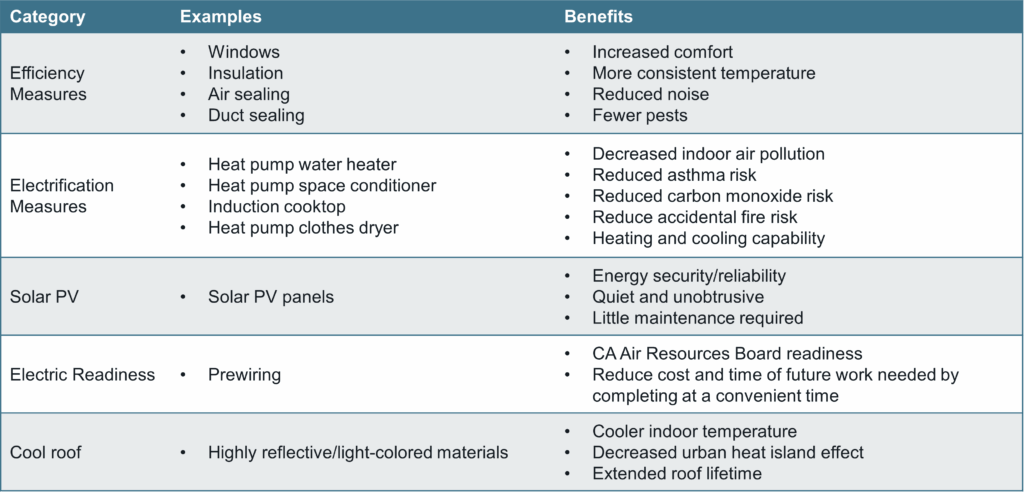
In addition to greenhouse gas emissions reduction, reach codes have many other co-benefits.
Cost-effectiveness studies
Reach codes cannot be adopted without evidence of being cost-effective.