



how can we assist you?
I want to learn about electrification and its benefits
Tell me more about what electrification is
Electrification is the process of transitioning away from fossil fuels (natural gas, propane, oil, coal, gasoline, etc.) to clean, renewable electricity like solar and wind. Electrification can refer to both buildings and vehicles. Building electrification, or building decarbonization, specifically refers to replacing appliances that traditionally run on natural gas with all-electric alternatives. Everyone can help in this transition through replacing household appliances such as a water heater with an efficient electric alternative when your existing appliance needs to be replaced. The intention is to create a stepwise process for transition that benefits the community and reduces potential burdens. The transition is becoming easier and more cost effective than ever.
Traditionally, homeowners have waited for a major renovation or for their existing gas appliances to reach end of life before electrifying. However, there are opportunities to take advantage of rebates and incentives that can make electrification a worthwhile investment in your family’s health and safety today!
With multiple options for transitioning when the time is right, a summarized list of traditional residential appliances and their all-electric alternatives are summarized below. In addition to these equipment replacements, there are other measures you can take to support the electrification of your building. The figure on the left of an all-electric building shows how your home can be healthier, affordable, and climate smart. (click to enlarge)
Tell me why electrification matters
Fossil fuels release greenhouse gas (GHG) emissions when burned, which exacerbates climate change and leads to worsening climate-driven disasters including wildfires, extreme heat, and poor air quality. According to Pinole’s most recent comprehensive GHG inventory in 2017 as discussed in the City’s Climate Action and Adaptation Plan (CAAP), 37% of Pinole’s GHG emissions come from natural gas use in residential and nonresidential buildings. Therefore, building electrification is a crucial strategy for reducing GHG emissions and fighting climate change. Additionally, Pinole’s building stock is primarily made up of single-family residential buildings, many of which were built before 1990 (City of Pinole, General Plan Land Use and Economic Development Element). Thus, single-family residential electrification offers the most significant opportunity to electrify Pinole’s building stock and reduce emissions in line with the CAAP.
While some electricity is still produced with fossil fuels, utility providers across the Country are increasingly investing in renewable energy, greening the electric grid over time. Pinole receives energy from Marin Clean Energy (MCE), delivered via PG&E infrastructure. MCE is a local community choice aggregator providing renewable electricity options for up to 100% renewable electricity (MCE’s Deep Green Program).
Consistency with the City’s Goals
Pinole’s CAAP intends to achieve building electrification and energy resilience goals via the following Measures, of which the Electrification Concierge Program is a supporting action:
- BE-1: Electrify 100% of new construction in the City in 2024
- BE-2 Electrify existing residential buildings to reduce natural gas consumption by 26% by 2030 and 100% by 2045
- BE-3 Electrify existing commercial and mixed-use (i.e., combined commercial and residential) buildings to reduce natural gas consumption 18% by 2030 and 100% by 2045
- BE-4 Increase the number of accounts enrolled in MCE’s Deep Green option to 95% communitywide by 2030
- BE-5 Increase generation and storage of local community-scale renewable energy
Tell me about additional benefits of electrification

Making this transition not only allows buildings to use increasingly cleaner energy sources, but also provides the following co-benefits:
- Improves indoor air quality
- Several studies have linked gas stoves to increased asthma rates due to pollutants produced by these appliances. Children living in homes with gas stoves have a 24% increased risk of being diagnosed with asthma and 42% increased risk of experiencing asthma symptoms including wheezing.
- Energy bill savings over time
- On-bill savings reflect the long-term savings of converting from gas appliances to electric appliances. A joint analysis by Silicon Valley Clean Energy and Peninsula Clean Energy found that single-family homes switching from gas to standard electric appliances can save approximately $380 annually ($32 monthly), with savings increasing to $495 annually ($41 monthly) when opting for high-efficiency electric equipment. Additionally, MCE has been instrumental in helping residents save on their electricity bills. Since March 2020, MCE customers have collectively saved $62 million, with the average resident saving $5 per month compared to PG&E rates.
- Efficiency, Reliability & Resilience
- Electrification with energy efficiency measures (e.g., insulation, air sealing, windows/doors, smart controls etc.) further enhances both reliability and comfort, while lowering energy bills. Integrating solar panels and battery storage can boost resilience by allowing buildings to maintain power during outages and reducing exposure to volatile grid prices, making the shift to electric living more economical, reliable, and sustainable.
- Fosters green job growth
- According to a 2019 UCLA study on California building decarbonization workforce needs, The rise of electrification would lead to green job growth in the region particularly for electricians, HVAC installers, plumbers, solar installers, BESS technicians, etc.
- Environmental Justice
- Transitioning to heat pumps provides efficient heating and cooling, which especially protects children, seniors, and those with chronic illnesses from extreme temperatures. These improvements are vital for low-income communities and communities of color that have historically borne a disproportionate share of pollution. Prioritizing access to electrification for low-income households and businesses can directly advance racial and environmental justice.
- Helps create heathier, safer, and more resilient environments
- Building electrification creates a cascade of public health and equity benefits by replacing fossil fuel appliances with efficient electric alternatives. By eliminating home emissions of fine particulate matter (PM2.5) and other pollutants, electrification dramatically improves outdoor air quality. Studies estimate building electrification would lead to 3,400 fewer premature deaths, 1,300 fewer hospital admissions, 220,000 fewer asthma attacks, and $40 billion in nationwide health benefits every year. All-electric homes also eliminate safety risks like gas leaks which can cause carbon monoxide poisoning and combustion-related fires, while modern electric appliances and grid-connected homes offer more resilience against price shocks and power outages as the energy system evolves.
- Futureproofing your home to get ahead of upcoming regulations
- In March 2023, the Bay Area Air District approved a Zero-NOx Requirement for newly installed furnaces and water heaters in the Bay Area. Currently, only electric appliances comply with these standards. All residential water heaters and furnaces and water heaters will need to comply by January 2027 and 2029, respectively. Early adoption avoids costly retrofits later and installation of a heat pump furnace could also relieve you of having to replace your HVAC system at its end of life.
Show me what electrification looks like
Dispel myths and mischaracterizations about all-electric homes
“Generating electricity produces climate pollution and electricity is dirty energy.”
In California, roughly 60% of the electricity on the grid now comes from renewable sources, and that share is steadily increasing. When you switch from natural gas to efficient electric appliances, you move from 0% renewable energy (and direct methane combustion in your home) to 60% renewable energy with no on-site carbon emissions. By adding rooftop solar or joining a community solar program, you can reach 100% renewable power (QuitCarbon).
“Refrigerant in heat pumps can worsen climate change.”
Refrigerant is a substance that traps heat easily and is what makes heat pumps so efficient at redistributing heat. If released, refrigerant can have a high Global Warming Potential (GWP) which is why it is important to find appliances that utilize low-GWP refrigerant. Refrigerant is illegal to release and should only be handled by trained HVAC professionals.
“Our grid will not be able to handle all-electric homes and EVs.”
California’s electric grid will need upgrades over time to handle increased electrification, however, major investments in clean energy and infrastructure upgrades are helping California meet this increasing demand. Additionally, electrification is expected to make the grid more reliable, resilient, and affordable by smoothing seasonal demand, shifting usage away from peak hours, and lowering utility costs over time (QuitCarbon).
“Electrification causes more power outages.”
Recent increased power outages are not related to electrification, but rather due to Enhanced Powerline Safety Settings (EPSS) implemented by utilities like PG&E to increase resiliency by preventing wildfires, extreme weather events, and to outdate power infrastructure (QuitCarbon).
“Heat pump water heater will make the surrounding room uncomfortably cool.”
A heat pump water heater will slightly cool and dehumidify the space around it. But the effect is typically subtle, and it can be avoided completely with the right installation (QuitCarbon).
“Gas stoves are better for cooking.”
Induction cooktops are becoming increasingly popular with chefs because they use electromagnetic energy to heat your cookware directly instead of warming the burner. This allows for faster cooking, precise temperature control, and added safety because the surface stays cool to the touch. They are also more energy efficient than gas stoves and provide a cleaner, more environmentally friendly way to cook (Forbes).
I am interested in electrifying my home, but do not know where to begin
Connect me with a clean energy coach to guide me through the entire process (at no cost and no strings attached)


The City of Pinole is partnering with QuitCarbon, a no-cost clean energy assistance provider, to accelerate the City’s Climate Action and Adaptation Plan goals for cleaner and healthier community. With QuitCarbon, make the switch to electric at your own pace…there is no pressure or commitment. QuitCarbon is simply available as needed to guide you through any or all steps of the process. Their free services include finding the right project for you, review of project bids for fairness, guidance on cost-saving incentives, introduction to vetted contractors, and more. Get connected with a clean energy coach for free at www.quitcarbon.com/pinole.
Let me get started on my own first
There are multiple key steps you should take to partially or fully electrify your home and create a safer, heathier living space. The electrification journey can happen quickly in a whole home remodel or span years as gas appliances are slowly switched out for electric ones at end of life. Electrification of some appliances can begin with budget-friendly options and be fully transitioned as it becomes feasible. Many of these upgrades take a day or less and will allow you and your family to reap the benefits of a cleaner and safer home for generations to come. The essential electrification steps are as follows:
Step 1: Make a list of your natural gas appliances
Appliances can be prioritized for retrofitting based on the following factors
- Time until replacement: It is the most economical to electrify appliances as old, natural gas appliances reach end of life. Assess when you or the previous owner installed existing appliances, appliances that need frequent repairs, and when the time to replace them will be.
- Current energy use: Existing natural gas appliances that use the most amount of fuel should be prioritized to reduce GHG emissions and utility bills. To identify which appliances are driving the most use, start by reviewing your utility bill for your total gas consumption, typically measured in therms. Then, compare that number against your household appliance list and consider how often and how long each is used. For example, space heating and water heating generally account for the largest share of natural gas use in most homes. Cross-referencing this information can help you pinpoint the appliances most responsible for high gas consumption and provide a clear starting point for efficiency improvements.
- Major renovation planned: A whole home electrification approach is usually appropriate during a major renovation where large amounts of equipment are being replaced. This timing allows for heating, cooling, water heating, cooking, and other systems to be upgraded together, reducing the need for piecemeal installations later. Because walls, floors, or ceilings may already be open during construction, it is easier and more cost-effective to run new electrical wiring, upgrade panels if needed, and install modern, efficient equipment all at once. Taking this comprehensive approach can avoid multiple rounds of construction costs, minimize disruption, and ensure that new systems are designed to work seamlessly together, providing long-term energy savings and reduced greenhouse gas emissions.
Step 2: Identify your electrical service and panel capacity
Most natural gas appliances (like stoves, water heaters, and HVAC units) use 120 -volt electrical connections, but some all-electric models require a dedicated 240-volt circuit, which may strain existing electrical panels. Previously, electrification projects required panel upgrades, which can be costly and time-consuming. Most homes need at least 100 amps, but 150–200 amps are ideal for full electrification. However, new energy-efficient technologies are reducing these impacts. A UCLA study found that only 3% of single-family and 10% of multi-family homes need panel upgrades to fully electrify. An additional 32% (single-family) and 59% (multi-family) require load management strategies (aka a “watt diet”) to work within existing panel capacity
- Locate your main electrical panel (usually in a garage, basement, or utility closet).
- Look for the main breaker rating which is usually labeled in amps (e.g., 100A, 150A, 200A).
- Count breaker slots available for new circuits.
- For more information on how to check your panel, download your utility bill for personalized recommendations, forecast utility bill savings, cap or remove your gas meter, etc., and check out QuitCarbon’s Energy and Utilities FAQ page.
Watt-Diet Strategies:
- Ask your electrician to complete an electric load calculation, most homes do not exceed 100amps even when fully electrified.
- Use energy efficient appliances like heat pumps for space and water heating and a combined washer/dryer. Some appliances are “retrofit-ready” like 120-volt heat pump water heaters, HVAC units, and battery-powered induction stoves, which can plug into standard outlets, and smart panels and circuits which further ease electrification by managing loads.
- “Right size” your heat pump. Oftentimes, homes can use a smaller heat hump than is typically installed, resulting in a reduced impact on panel capacity.
- Use circuit-sharing/ circuit-pausing outlets which can share a singular high-power circuit between multiple electric appliances. A smart panel can similarly manage energy load across devices in your home to avoid triggering a utility service upgrade.
- Use subpanels or tandem breakers to add more circuits to your existing electrical panel, if needed.
- Consider energy-efficiency retrofits like additional insulation or air-sealing in the attic or installing double pane windows. These retrofits can help ensure heated and cooled air stay within your home, allowing your heat pump and HVAC to work more efficiently and reduce panel demand.
What an Upgrade Looks Like, if needed:
- A licensed electrician replaces your panel
- The utility (PG&E) will upgrade your service if necessary. The cost varies depending on the length of the service and whether it is above or below ground. The utility also provides a $3,000 ratepayer credit that can cover some or all of the cost.
- Panel upgrade cost: $2,000–$5,000, but rebates and tax credits can offset this. Check out the Pinole Energy Enhancement Rebate Program which offers rebates on electrical panel upgrades!
Step 3: Get a free personalized electrification plan with QuitCarbon
QuitCarbon is a social enterprise and Certified B Corp that provides free technical support to help homeowners electrify their homes. QuitCarbon can help with the following services
- Provide a personalized electrification plan and guide you throughout the entire electrification process
- Help you find the right equipment for your unique situation and budget
- Maximize cost savings by matching you with rebates and tax incentives
- Introduce you to vetted contractors near you
- Review bids and compare them to industry standards to ensure you get a competitive scope and price
Step 4: Install equipment
Based on your consultation with QuitCarbon and their personalized electrification plan, begin electrifying your appliances and making energy efficient retrofits. QuitCarbon will continue to help you with any technical assistance through the retrofitting process and can help connect you to available incentives and rebates.
Step 5: Enjoy your healthier, more efficient home
Once your upgrades are complete, residents can expect a variety of benefits:
- Lower Bills: Heat pumps and efficient appliances cut energy costs
- Cleaner Air: No indoor combustion means better indoor air quality
- Climate Impact: You’ve reduced your home’s carbon footprint
- Comfort: Modern electric systems provide consistent heating, cooling, and cooking performance
I need help selecting the right electrification project for my home
Connect me with a clean energy coach to guide me through the process (at no cost and no strings attached)
The City of Pinole is partnering with QuitCarbon, a no-cost clean energy assistance provider, to accelerate our Climate Action and Adaptation Plan goals. Make the switch to electric at your own pace…there is no pressure or commitment. QuitCarbon is simply available to guide you through the process as needed. Their free services include finding the right project for you, review of project bids for fairness, guidance on cost-saving incentives, introduction to vetted contractors, and more. Get connected with a clean energy coach for free at www.quitcarbon.com/pinole.
I want to learn more about different electrification projects first
Space Heating and Cooling- Heat Pump Heating and Air Conditioning
A heat pump is an all-in-one system that provides both heating and cooling by using a refrigerant cycle to transfer heat, rather than generating it through combustion of natural gas. In winter, it extracts heat from the outside air and moves it indoors; in summer, it reverses the process to cool your home/ building. These appliances are over 300% efficient, saving you money on your utility bills.
Benefits of Electrification:
- Dual Functionality: A heat pump HVAC replaces both your furnace and air conditioner, reducing installation and maintenance costs.
- Energy Efficiency: Heat pumps can be 3–4 times more efficient than gas furnaces.
- Lower Emissions: Runs on electricity, reducing reliance on fossil fuels and improving indoor air quality.
- Comfort: Provides consistent indoor temperatures and can deliver more even heating and cooling than conventional systems.
- Safety: Eliminates combustion in the home, reducing risks of carbon monoxide leaks or gas-related hazards.
Key Considerations:
- Upfront Cost: Higher initial investment but often offset by rebates and lower operating costs.
- Electrical Panel: Some older homes may require an upgrade to handle new electrical load. However, technological advances in appliance capacity, circuit-sharing, and other watt-diet strategies have reduced the strain on existing panels and made panel upgrades much less common. Refer to “Step 2: Identify your electrical service and panel capacity” for more information. [link to How to Make Your Home Safer, Healthier, and Increase Value subsection]
- Ductwork: Existing ducts may need sealing or resizing for optimal performance.
Water Heating- Electric Heat Pump
Heat Pump Water Heaters (HPWH), like heat pump space heaters, use electricity and a refrigerant cycle to heat indoor water using outdoor air. They store hot water in a tank the same way water heaters do, but the water is heated more efficiently and without fossil fuels.
Benefits of Electrification:
- Efficiency: HPWHs are 2-3 times more efficient than standard electric or gas water heaters, with high-end models being up to five times more efficient.
- Lower Carbon Footprint: No combustion emissions.
- Potential Savings: Energy efficiency helps lower energy bills over time.
- Comfort & Performance: Maintain consistent hot water supply and often include smart controls for scheduling and monitoring.
- Indoor Air Quality: Eliminating combustion appliances reduces indoor pollutants and improves household air quality.
- Safety: No open flames or gas leaks, lowering the risk of fire or carbon monoxide poisoning.
Key Considerations:
- Unitary versus Split HPWHs: HPWHs come in unitary forms in which the heat pump and water tank are combined, or they can come split into two different components to allow for locating the heat pump outside (quieter, more energy efficient, and more expensive).
- Hybrid versus standard HPWH: Some models are a hybrid of a HPWH and backup electric resistance heater in case of cold temperatures. HPWHs are typically efficient in heating water when outdoor temperatures are as low as 37 degrees Fahrenheit.
- Space & Ventilation: HPWHs need space and airflow.
- Upsizing your HPWH: If space permits, it could be beneficial to get a larger HPWH tank size than your household typically needs, so you can heat water when electricity is cheap or clean (like midday when solar is abundant) and then use that stored hot water later when electricity prices are higher.
Cooking- Induction Cooktop and Electric Oven
Induction cooktops use electromagnetic energy to heat pots and pans directly, while electric ovens use heating elements for baking and roasting.
Benefits of Electrification:
- Health: Induction cooktops eliminate indoor air pollutants such as nitrogen dioxide (NO₂) that are produced by burning natural gas, creating a healthier indoor environment and reducing respiratory risks.
- Safety: Enhance safety, reducing the risk of burns and lowering the chance of accidental fires.
- Efficiency: Induction is faster and more energy-efficient than gas.
- Easy Cleanup: Smooth glass surface is simple to clean.
Key Considerations:
- Cookware: Requires magnetic cookware (cast iron, stainless steel).
- Electrical Needs: May need a 240-volt outlet.
- Learning Curve: Induction heats differently than gas and may take some adjusting to get used to.
- Variety of appliances: There is a wide range of appliances varying in size, number of burners, oven capacity, voltage, etc.
Clothes Drying- Heat Pump or Ventless Electric Clothes Dryer
Both heat pump and ventless electric dryers are ventless and are ideal for apartments or homes without a venting option. The difference is that heat pump dryers use a refrigeration cycle and recirculates heated air to continually dry clothes, while ventless electric dryers use electric resistance to heat air and then condense and drain the moisture. This makes heat pump models significantly more efficient.
Benefits of Electrification:
- Energy Savings: Heat pump dryers use up to 50% less energy than conventional dryers.
- No Venting Needed: Great for homes without exterior vent access.
- Gentler on Clothes: Heat pump dryers have lower drying temperatures which reduce fabric wear.
- Indoor Air Quality: No venting required keeps dust, lint, and pollutants contained, improving indoor air conditions.
- Convenience & Versatility: Can be installed in a variety of spaces, including apartments and closets, without major modifications.
Key Considerations:
- Drying Time: Heat pump and ventless electric dryers can take longer than gas models.
- Cost: Heat pump dryers have a higher upfront price, but energy savings over time.
- Electrical Requirements: Typically need a 240-volt outlet.
Solar PV installation and Battery Storage- Lowest Cost Electricity!
Solar photovoltaic (PV) systems convert sunlight into electricity for your home. Battery storage systems allow you to store excess solar energy generated while the sun is out for use at night or during outages, increasing energy independence.
Benefits of Electrification:
- Lower Energy Bills: Generate your own electricity and reduce reliance on the grid.
- Resilience: Battery storage provides backup power during outages.
- Environmental Impact: Solar energy is renewable and emissions-free.
- Incentives: State and local incentives may be available to offset project cost.
Key Considerations:
- Roof Suitability: Orientation, shading, and structural integrity matter.
- Upfront Cost: Solar and battery systems are a significant investment, but incentives can offset costs.
- Permitting & Interconnection: Requires City permits and utility approval for net metering.
- Future Needs: Size your system for current and future loads (e.g., EV charging, heat pumps, etc.).
Mobility- Electric Vehicle Charger Installation
An electric vehicle (EV) charger supplies electricity to your electric vehicle at home. Level 1 chargers use a standard outlet, while Level 2 chargers require a 240-vlt circuit for faster charging.
Benefits of Electrification:
- Convenience: Charge your EV overnight at home.
- Cost Savings: Electricity is cheaper than gasoline, especially with time-of-use rates, meaning lower operating costs.
- Climate Impact: Driving an electric vehicle reduces greenhouse gas (GHG) emissions.
- Air Quality: Switching from gasoline to electric vehicles eliminates tailpipe emissions, reducing smog-forming pollutants and improving the air we breathe in our neighborhoods.
Key Considerations:
- Electrical Panel: Level 2 chargers often require a panel upgrade or circuit-sharing technology. Refer to “Step 2: Identify your electrical service and panel capacity” for more information. [link How to Make Your Home Safer, Healthier, and Increase Value subsection]
- Permitting: City permits and compliance with building codes are required.
- Location: Install near your parking spot with easy cable access.
- Futureproofing: Consider higher-capacity chargers for future EVs and smart chargers that automatically charge during off-peak hours. Marin Clean Energy, our community choice clean energy provider, offers their EV smart charging app compatible with certain chargers for additional incentives.
Energy Efficiency and Building Envelope Retrofits- Save Even More!
Energy efficiency upgrades include insulation, air sealing, high-performance windows and doors, smart thermostats, LED lighting, and improved ventilation with fans. These measures reduce energy waste and improve comfort, ensuring that heated air stays within the house and energy is used more efficiently. Improving the efficiency of your home can let you downsize your heating and cooling equipment, lower energy bills, and protect your health from wildfire smoke and extreme heat which is becoming increasingly common.
Benefits of Electrification:
- Lower Bills: Reduce heating, cooling, and lighting costs by improving efficiency.
- Comfort: Better temperature control and fewer drafts.
- Health: Improved indoor air quality with proper ventilation.
- Supports Electrification: A tighter building envelope allows smaller, more efficient heat pumps.
Key Considerations:
- Prioritize Air Sealing: Start with sealing leaks before adding insulation.
- Smart Controls: Use programmable thermostats and sensors for optimal performance.
- Lighting: Switch to LEDs for immediate savings.
- Windows and Doors: Upgrading single pane or very old windows can help improve energy efficiency and comfort, but are not a priority for replacement solely for energy efficiency gains
Request a free green home kit through Rising Sun which includes energy-efficient supplies such as LED lights, a smart power strip and more. (supplies offered are subject to change)
Outdoor Equipment- Outdoor Pools and Grills
Electric pool heaters and heat pump pool heaters replace gas-fired systems, while electric grills and induction cooktops replace gas grills for outdoor cooking.
Benefits of Electrification:
- Efficiency: Heat pump pool heaters use 50–70% less energy than gas heaters.
- Safety: No combustion gases or open flames.
- Climate Impact: Eliminates methane emissions from outdoor gas appliances.
- Durability and Longevity: Heat pump systems often have longer lifespans and lower maintenance requirements than gas heaters.
- Improved Air Quality: No combustion byproducts are released into the surrounding environment, enhancing local air quality.
Key Considerations:
- Electrical Load: Pool heaters and electric grills may require dedicated circuits.
- Location: Ensure proper ventilation for electric grills and adequate space for pool equipment.
- Cost: Higher upfront cost for heat pump pool heaters, but lower operating costs over time.
- Grilling style: If you prefer to grill over fire, consider ditching the utility-tied natural gas grill for a separate propane gas grill. Electric and propane gas grills can be purchased directly from a vendor and do not need to be sourced from a contractor.
I have an electrification project in mind and would like to get started now
I want to explore different clean energy appliances for my home
Of the four major appliance use types: space heating, water heating, cooking, and clothes drying, heat pumps for space heating are typically procured and installed by a contractor. In contrast, homeowners typically purchase induction stoves, electric ovens, electric dryers, and occasionally water heaters on their own. While QuitCarbon can help you obtain personalized appliances and connect you to qualified contractors, the following list can also help you identify vendors of induction stoves, electric ovens, clothes dryers, and heat pump water heaters. Ductless mini splits are also eligible for PEER rebates. Layer vendor promotions with the Pinole Energy Enhancement Rebate Program for even more savings!
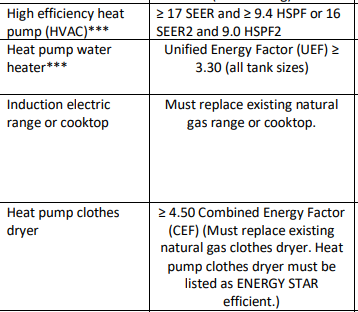
NOTE: The Pinole Energy Enhancement Rebate program offers rebates on an array of home appliances. Please keep rebate energy-efficiency requirements in mind as you explore different brands and models below (see left table).
Vendors for Induction Stoves and Electric Oven
Small Business (Yes/No)
- Yes
- Yes
- Yes
- No
- No
- No
Vendors for Heat Pump or Ventless Electric Clothes Dryer
Small Business (Yes/No)
- Yes
- Yes
- Yes
- No
- No
- No
Learn about different options for a Heat Pump Water Heater
Get me connected to a contractor
I would like free, personalized assistance by QuitCarbon
Note: Please keep in mind different rebate programs require working with certain contractors as you receive project bids
The City of Pinole is partnering with QuitCarbon, a no-cost clean energy assistance provider, to accelerate our Climate Action and Adaptation Plan goals. Make the switch to electric at your own pace…there is no pressure or commitment. QuitCarbon is simply available to guide you through the process as needed. Their free services include finding the right project for you, review of project bids for fairness, guidance on cost-saving incentives, introduction to vetted contractors, and more. Get connected with a clean energy coach for free at any step of the process at www.quitcarbon.com/pinole.
If you would like free technical assistance in creating a personalized plan to electrify your home, you can register for the Pinole Concierge Program through QuitCarbon! QuitCarbon will assist with the following services:
- Provide a personalized electrification plan and guide you throughout the entire electrification process
- Help you find the right equipment for your unique situation and budget
- Maximize cost savings by matching you with rebates and tax incentives
- Introduce you to vetted contractors near you
- Review bids and compare them to industry standards to confirm you get a competitive scope and price
- Identify current and upcoming rebates, tax credits, and financing programs that are relevant to your upgrades .
I would like to find contractors for project bids on my own and use QuitCarbon as needed
Note: Please keep in mind different rebate programs require working with certain contractors as you receive project bids
Note: At no cost, QuitCarbon will review your project scope and bids to ensure fair pricing
Note: Review rebate program requirements to help inform your project’s equipment and scope
Note: The directory is solely to help users get connected with local contractors familiar with electrification projects. There was no vetting process to list contractors. Please use online reviews or other methods to ensure contractors you receive bids from meet your standards.
BROWSE THE DIRECTORY HERE! Pinole All-Electric Building Concierge Contractor Directory VBA.xlsm
What Information Does the Directory Include?
- Company Name and Contact Information
- Contractor License Type and Number
- Types of Electrification Projects Offered (e.g., Heat Pump HVAC, Water Heater, Solar/Battery)
- Financing Options Available
- Rebate Program Support
- Languages Spoken
- Service Area
Learn more about different appliance options
I want to learn about cost, incentives and financing for electrification projects
Single family homes can transition away from fossil fuel combustion and towards clean electric appliances for space heating, water heating, cooking, and clothes drying – this is known as “electrification.” All electric homes can even run on solar for more cost savings and climate benefits.
Electrifying existing buildings typically costs more upfront than replacing gas appliances, but some projects can be cost‑competitive when life‑cycle costs and whole‑home electrification are considered. Many homes also see overall energy bill savings. This is due to the high efficiency of heat pumps (up to 400% efficient!) and because natural gas rates have been increasing more rapidly relative to electric rates, and it is anticipated that this trend will continue to increase, according to a 2021 study by Gridworks.
However, before starting an electrification project, it is important to know the approximate project cost so you can plan accordingly and seek out appropriate rebates. Below are estimated costs for electrification projects from TECH Clean California data, QuitCarbon’s contractor quote database, Pinole Energy Enhancement Rebate Program (PEER) and other sources. Each section discusses cost ranges, median costs, and considerations for why individual project costs may be more or less expensive than these averages. The following electrification project types are covered below: space heating, water heating, cooking, and clothes drying.
To help you understand the electrification opportunities for improving your home, the City of Pinole has partnered with QuitCarbon, which provides free technical support and personalized, cost-efficient electrification plans to help homeowners electrify their homes. QuitCarbon can help you make sense of electrification versus gas costs, help connect you with vetted contractors, and/or review electrification quotes from other contractors to ensure you are getting a reasonable quote for your next electrification project.
See Contra Costa County’s Clean Energy Roadmap to learn more about why to electrify and how to mitigate any financial burden to make the switch!
Electrification project cost ranges
Space Heating
Space heating electrification projects involve the transition of natural gas fired furnaces to electric heat pump powered HVAC systems which provide both heating and cooling. These systems typically come in either ducted or ductless varieties, with ducted projects costing more on average. Heat pumps must be installed by a trained and licensed HVAC contractor, and it can be difficult to find costs online or know if a quote from your contractor is reasonable.
The following cost estimates include county-level heat pump HVAC data from TECH Clean California, ground-truthed by additional heat pump HVAC project costs from Pinole’s PEER program and QuitCarbon’s contractor quote database for the City of Pinole. TECH Clean California’s dataset evaluates approximately 50,000 electrification projects California-wide. However, this analysis looks at 1,582 heat pump HVAC projects within Contra Costa County.
Heat Pump Costs
Note that these costs include all costs (equipment, installation, permits, etc.) but do not include rebates or incentives.
Ductless Heat Pumps
Cost Per Project – Range: $3,800 (single zone) to $51,600 (Multizone)
Cost Per Project – Median: $18,600
Ducted Heat Pumps
Cost Per Project – Range: $6,900 to $57,800
Cost Per Project – Median: $23,600
Variety in Costs for Heat Pump Projects
There are several reasons why your heat pump HVAC electrification project may be quoted higher than the median project costs listed above as there are several project factors that can make projects more costly. The most expensive projects in the ranges listed above are likely to have several of the following factors:
- Large Homes Requiring Multiple Units: Bigger homes often need larger ducted systems or multiple ductless systems. This means additional equipment costs, longer installation times, and potential electrical upgrades, all of which raise the overall price.
- Old or Damaged Ductwork: If your existing duct system is outdated or in poor condition, it may need repairs or a full replacement to ensure proper airflow and efficiency. This adds labor and material costs to the project. If your ductwork is in bad shape, consider a ductless system which provides higher levels of control (allowing you to heat each room to a different temperature setting) and potentially saving money.
- Presence of Asbestos: Older homes sometimes contain asbestos in insulation or duct materials. Specialized removal and remediation are required to meet safety regulations, which can significantly increase project costs.
- Electrical Panel Upgrades: Heat pumps may require more electrical capacity than older HVAC systems. If your panel is undersized or outdated, upgrading can add significant cost. However, due to advancements in high-efficiency technologies and the adoption of load-reduction strategies, electrical panel upgrades are often no longer required for heat pump installations. Of the 1,266 heat pump HVAC projects within the TECH Clean California database that provided panel replacement data, only 10 included a panel upgrade.
- Insufficient Electrical Wiring: Some homes may need new wiring or dedicated circuits to handle the load of heat pumps and associated equipment.
- Limited Space for Equipment: If your property has tight mechanical rooms or limited outdoor space for condensers, installation may require custom solutions.
- Accessibility Challenges: Homes with difficult access such as crawl spaces or multi-story layouts can require more time and equipment for installation.
- Permitting and Code Compliance: Some jurisdictions have strict permitting requirements or additional inspections, which can add time and fees. To mitigate this challenge, The City of Pinole has launched instant permits for heat pump HVACs. For a limited time, there will be no permit fees for heat pump HVACs.
These challenges don’t make electrification impossible. However, buildings with one or more of these challenges can expect to see costs above the median listed above.
If you are thinking about installing a heat pump HVAC in your home, the City is offering no-cost permit fees and a $3,000 rebate through the Pinole Energy Enhancement Rebate Program for a limited time.The program is layerable with the BayREN EASE program which offers negotiated pricing for heat pump HVAC installations for income-qualifying households. The rebate program page provides more details. Check rebate program requirements for appliance specifications that need to be met. If you need support getting started with your project such as being connected with vetted contractors or reviewing project bids and scopes for fairness, please reach out to QuitCarbon for free assistance. Please note for heat pump installations, a TECH-certified contractor is required for a rebate.
Water Heating
Water heating electrification projects involve the transition of natural gas fired water heaters to heat pump water heaters (HPWHs). HPWHs are up to 300% efficient (significantly more efficient than electric resistance) and are the preferred technology for electric water heating. The following cost estimates include county-level HPWH data from TECH Clean California, ground-truthed by previous HPWH project costs from Pinole’s PEER program and QuitCarbon’s contractor quote database for the City of Pinole. TECH Clean California’s dataset evaluates approximately 50,000 electrification projects California-wide. However, this analysis looks at 371 HPWH projects within Contra Costa County.
Heat Pump Water Heater Costs
Cost Per Project – Range: $3,900 to $27,500
Cost Per Project – Median: $8,000
Variety in Costs for HPWH Projects
There are several reasons why your HPWH electrification project may be quoted higher than a typical project. There are several project factors that can make projects more complex, and therefore costly including:
- Storage Capacity: HPWHs come in a variety of storage sizes from less than 55 gallons to over 100 gallons (in the case of some combined heat and hot water systems). Larger systems usually cost more but can provide more efficient hot water to high demand households. In general, you should go up one or two sizes from your current natural gas tank size. A larger tank size lets the heat pump work most efficiently while maximizing the hot water available.
- Electrical Panel Capacity: HPWHs often require a dedicated 240V circuit. If your electrical panel is undersized or fully loaded, an upgrade or subpanel installation may be necessary. However, due to advancements in high-efficiency technologies and the adoption of load-reduction strategies, electrical panel upgrades are often no longer required for HPWH installations. Of the 371 HPWH projects within the TECH Clean California database, only 5 included a panel upgrade.
- Limited Space for Equipment and Ventilation Requirements: HPWHs are larger than traditional water heaters and need adequate clearance for airflow. Tight utility closets or basements may require equipment relocation. Additionally, because HPWHs draw heat from surrounding air, they need proper ventilation. In small or enclosed spaces, additional ducting or ventilation solutions may be required.
- Plumbing Modifications: Older plumbing systems may need rerouting or upgrades to accommodate the new unit, especially if relocating the water heater to a more suitable space. HPWHs also produce condensate that must be drained properly. If no drain is nearby, installing one adds cost.
- Noise Considerations: HPWHs generate sound similar to a refrigerator. If installed near living spaces, soundproofing or relocation may be needed.
- Accessibility Challenges: Difficult-to-reach installation areas (tight crawl spaces, multi-story buildings) increase labor time and complexity.
- Permitting and Code Compliance: Some jurisdictions have strict permitting requirements or additional inspections, which can add time and fees. To mitigate this challenge, The City of Pinole has launched instant permits for heat pump water heaters. For a limited time, there will be no permit fees for heat pump water heater installations.
These challenges don’t make electrification impossible. However, buildings with one or more of these challenges can expect to see costs above the median listed above.
If you are thinking about installing a heat pump water heater in your home, the City is offering no-cost permit fees and a $3,000 rebate through the Pinole Energy Enhancement Rebate Program for a limited time. The program is layerable with the BayREN EASE program which offers fixed, negotiated pricing for heat pump water heater installations for income-qualifying households. The rebate program page provides more details. Check rebate program requirements for appliance specifications that need to be met. If you need support getting started with your project such as being connected with vetted contractors or reviewing project bids and scopes for fairness, please reach out to QuitCarbon for free assistance. Please note for heat pump installations, a TECH-certified contractor is required for a rebate.
Cooking
In contrast to heat pumps and HPWHs that require a contractor to procure equipment, induction ranges, cook tops, and electric ovens can be purchased directly by homeowners from equipment vendors like appliance stores. Electric resistance stoves are also available at a cheaper price point for the equipment. However, resistance stoves are less efficient and are generally less fun to cook on. Induction ranges and ovens are becoming industry standard due to their efficiency and accurate temperature control.
Induction Stove and Electric Oven Range Costs
Similar to gas stoves, induction stoves have a huge price range depending on the features desired by each homeowner. The following vendors supply induction stove/ electric oven ranges within or near Pinole within the following price ranges:
Mike’s Appliances (Located in Pinole): Quotes upon request. In-house promotions listed.
Friedmans Appliance: $900 through $37,000 (the high end of this range represents costs associated with a professional style induction range and luxury brands)
Contra Costa Appliance: $1,000 through $15,700
Home Depot: $900 through $8,500
Lowe’s: $700 through $6,800
Best Buy: $400 through $19,500
Variety in Costs for Induction Stove and Electric Oven Range Projects
Induction stove/electric oven ranges come in many different price points depending on the type of range and installation complexity. In general, induction stove/electric oven ranges are comparable in cost with gas ranges except for a circuit upgrade. Most ranges require a dedicated 240-volt outlet and 30-50 amp circuit breaker. New circuits cost anywhere from $500 to $2,000 to install on top of the base appliance price.
However, there are some induction stove/electric oven ranges that have been designed to operate on an existing 120 V circuit. Some of these include battery storage to enable cooking during power outages as well as the ability to charge when electricity has the lowest price and fewest associated GHG emissions. Refer to QuitCarbon or for assistance finding the right induction stove/ electric oven range to serve your needs.
Some features to consider that could impact the cost of your induction stove/ electric oven range project include:
- Freestanding ($) vs. slide-in ranges ($$): Slide-in models are designed to fit between cabinetry and require precise measurements and design, while free standing models can be placed anywhere in your kitchen. You will need to use whichever type matches your kitchen layout.
- Number of burners and burner power: The more burners and the higher the wattage of each induction burner, the more expensive the induction stove
- Advanced oven features: Advanced, and often costly, oven features include convection ovens, self-cleaning, larger capacity, faster heating, multiple racks, “no-preheat” modes, and even air-fry or steam-roasting.
- Smart and safety controls: Some ranges include advanced controls such as advanced touch controls, digital displays, precise temperature adjustment, timers, “boost” heat, simmer or low-temp modes, automatic shutoff when cookware is removed, child locks, cooktop sensors, or even Wi-Fi/smart home integration. These features can all increase cost.
- Brand: Well-known, “premium” appliance brands (especially European brands or high-end U.S. brands) often charge a markup for brand name, build quality, reliability, reputation, and service network. More economical brands may offer more basic functionality at a lower price.
Test out an induction cooktop in the comfort of your home at no cost through the PG&E loaner program.
If you are thinking about installing an induction stove in your home, the City is offering a $500 rebate through the Pinole Energy Enhancement Rebate Program for a limited time. Check program requirements for appliance specifications that need to be met. If you need support getting started with your project such as being connected with vetted contractors or reviewing project bids and scopes for fairness, please reach out to QuitCarbon for free assistance.
Electric Dryer
Similar to cooking ranges, electric heat pump dryers can be purchased directly by homeowners from equipment vendors. Electric resistance dryers are also available at a cheaper price point than ventless heat pump dryers. Heat pump dryers are much more efficient, and have more gentle cycles that can take longer to dry. Heat pump dryers and combo washer/dryers (single drum, not stacked) are also available, however, these units have traditionally been less popular in the US market.
Electric Dryer Costs
The following prices cover both resistance and heat pump dryer models:
Mike’s Appliance (located in Pinole): Quote upon request. Rebates and financing available.
Friedmans Appliance: $400 through $4,500
Contra Costa Appliance: $500 through $2,200
Home Depot: $300 through $900
Lowe’s: $200 through $2,300
Best Buy: $500 through $4,800
Variety in Costs for Electric Dryer Projects
Electric dryers are available at many different price points depending on the type of range and installation complexity. In general, electric dryers are comparable in cost with gas dryers except for a circuit upgrade. Most electric resistance dryers require a dedicated 240-volt outlet and 30-amp circuit breaker – heat pump dryers and combo washer/dryers typically use an existing 120-volt circuit. New circuits cost anywhere from $500 to $2,000 to install on top of the base appliance price (HomeGuide 2025).
Some features to consider that could impact the cost of your electric dryer project include:
- Type of Dryer: Vented vs. Ventless: Old-fashioned vented dryers are generally less expensive and easier to install (if you are replacing an existing vented dryer), while ventless (condensing or heat pump) models typically cost more.
- Capacity and Performance: Larger-capacity dryers or models with faster drying cycles tend to be more expensive. High wattage for quicker heating also increases cost.
- Advanced Drying Features: Premium features such as steam cycles, wrinkle prevention, sensor drying, sanitizing modes, and multiple temperature settings can raise the price.
- Smart Technology and Controls: Wi-Fi connectivity, app integration, voice control, and advanced digital displays add convenience but also increase cost.
- Brand and Build Quality: High-end brands or European models often come with a premium price for durability, design, and reputation. Budget brands may offer basic functionality at a lower cost.
- Installation Complexity: Factors like relocating the dryer, adding a vent or drain for ventless models, or working in tight spaces can increase labor costs.
If you are thinking about installing a heat pump dryer in your home, the City is offering a $400 rebate through the Pinole Energy Enhancement Rebate Program for a limited time. Check program requirements for appliance specifications that need to be met. If you need support getting started with your project such as being connected with vetted contractors or reviewing project bids and scopes for fairness, please reach out to QuitCarbon for free assistance.
Header text
BayREN estimates of electrification costs
Financing
Financing plays a pivotal role in accelerating home electrification by lowering upfront costs and enabling homeowners to unlock long-term energy savings and climate benefits. By offering flexible repayment options, these programs broaden accessibility and help residents adopt technologies like heat pumps, electric water heaters, and induction stoves without the barrier of high initial investment. The benefits and cons of financing as well as some common financing terms are defined below.
Benefits of Financing
Reduces Upfront Costs: Makes high-cost upgrades like heat pumps and solar more affordable immediately.
Improves Accessibility: Allows low- and moderate-income households to participate in electrification.
Aligns Payments with Savings: Monthly payments can be offset by lower utility bills.
Supports Comprehensive Upgrades: Enables bundling of multiple improvements (e.g., insulation + heat pump + EV charger).
Flexible Options: Programs like on-bill repayment offer long terms and alternative qualification criteria.
Increases Property Value: Energy-efficient homes often have higher resale value.
Cons of Financing
Credit Score Impacts: Financing a building or home improvement project can affect your credit profile. Applying for a loan typically triggers a hard inquiry, which may temporarily lower your score. Taking on additional debt can also impact your credit utilization ratio. However, maintaining a diverse credit mix and making on-time payments can help improve your credit over time.
Interest or Fees: Some loans add cost over time, even if rates are low.
Debt Obligation: Creates a long-term financial commitment that may affect credit or borrowing capacity.
Eligibility Barriers: Credit checks or property ownership requirements can exclude renters.
Complexity: Navigating multiple programs and terms can be confusing.
Financing Terms Defined:
- Zero Percent Financing: A traditional loan with no interest charged where you repay only the principal amount. Payments go directly to the lender, not through your utility bill. Often requires good credit.
- Green Loan: A loan specifically for sustainability improvements (e.g., solar panels, EV chargers). Offered by banks or credit unions with terms focused on environmental benefits.
Reliable financing options for your electrification home improvements include:
- California GoGreen Financing: The State of California’s GoGreen Financing Program connects residential and commercial building owners to low-interest green loans for energy-saving improvements, along with access to vetted contractors. These loans are offered by credit unions and green lenders , targeting clean energy upgrades like heat pumps, insulation, and solar with favorable interest rates and terms.
- The City is exploring options to offer a revolving fund program for electrification measures. Please check this page frequently for updates about this program.
- Check the contractor’s directory on this page to learn about their in-house financing options
Please reach out to QuitCarbon for free assistance on receiving rebates and financing for your electrification projects.
Rebates
Currently, the Pinole Energy Enhancement Rebate Program offers incentives for a suite of energy-efficiency residential projects such as heat pump HVACs, heat pump water heater, electrical panel upgrades, induction stoves, and more. State and regional rebate programs include TECH Clean California, which offers incentives for heat pump installations and contractor training; GRID Alternatives Single-Family Solar Homes (DAC-SASH) program, which provides no‑cost rooftop solar installations for income‑qualified homeowners living in disadvantaged communities; Self-Generation Incentive Program (SGIP), which provides rebates for battery storage systems; and BayREN programs, which supports energy efficiency upgrades for qualified residential properties. Incentives are also offered by our electricity providers Marin Clean Energy and PG&E. Some of these program’s incentives are stackable for increased savings.
These programs serve as critical tools to offset upfront costs and make electrification more accessible and affordable for households across the region. However, the availability of these rebates changes over time. There are several platforms that maintain current databases of available rebates specific to your zip code and electrification project of interest. These incentive databases include:
If you are thinking about electrification, the City of Pinole has partnered with QuitCarbon, which provides free technical support and free, personalized electrification plans to help homeowners electrify their homes. QuitCarbon can assist you with the following services:
- Provide a personalized electrification plan and guide you throughout the entire electrification process
- Help you find the right equipment for your unique situation and budget
- Introduce you to vetted contractors near you or you can contact contractors on your own using the Pinole Contractor Directory and receive technical assistance from QuitCarbon for guidance on the project scope and cost.
- Review bids and compare them to industry standards to ensure you get a competitive scope and price
- Identify available rebates, tax credits, and financing programs. .
I want to learn about if going electric is cost-effective
- A Pocket Guide to Home Electrification in the Bay Area is a comprehensive guide delineates simple and actionable ways to electrify your home without modifications. Contents include benefits, strategies, load calculations for a watt diet, case studies, and a product guide.
- 2022 Cost-Effectiveness Study: Existing Single-Family Building Upgrades details the methodology and results which prove cost-effectiveness for a variety of energy-efficiency measures for existing single-family homes.
- 2025 Cost-Effectiveness Study: Single-Family AC2HP details the methodology and results which prove cost-effectiveness for single-family homes to convert to heat pump HVAC
Tell me about upcoming programs to further simplify the switch
- Pinole Water Heater Loaner Program is under development and will help residential and potentially commercial property owners get immediately connected to a participating contractor for a temporary loaner water heater install while any necessary upgrades are made to accommodate replacement with a heat pump water heater. While programmatic features are still being developed potential offerings through the program may include no-cost permit fees and fixed pricing
- Pinole Electrification Revolving Fund is under development and will help program participants receive potentially zero or low-interest loans to cover upfront project electrification costs to be paid back into a self-sustaining fund for other prospective participants to do the same.
Help me get fair pricing for my electrification project
The City of Pinole is partnering with QuitCarbon, a no-cost clean energy assistance provider, to accelerate our Climate Action and Adaptation Plan goals. Make the switch to electric at your own pace…there is no pressure or commitment. QuitCarbon is simply available to guide you through the process as needed. Their free services include finding the right project for you, review of project bids for fairness, guidance on cost-saving incentives, introduction to vetted contractors, and more. Get connected with a clean energy coach for free at any step of the process at www.quitcarbon.com/pinole.
Qualifying homes through BayREN EASE program get access to fixed pricing on heat pump water heater and heat pump HVAC projects.
Break down a cost scenario for gas versus electric
Gas water heater costs:
- Average 40 gallon unit cost: $900
- Average unit installation cost: $600
- City permit cost: $270
- Total: $1,770
Heat pump water heater costs:
- Average 40 gallon unit cost: $1,900
- Average unit installation cost: $2,800
- City permit cost (no cost for a limited time): -$350
- Pinole Energy Enhancement Program rebate: -$3,000
- Total: $1,350